
🚗

EV Charger Installation Specialists Across the UK

Home electric vehicle chargepoints on a dedicated circuit, with supply and earthing checks, load management, DNO notification and smart charging set-up.

💰 Typical cost: £800–£1,600⏱ Timeframe: Half a day–1 day📋 Free surveys available
Job profileCost 2 of 5, Complexity 3 of 5, Duration 2 of 5, Dustiness 2 of 5, Disturbance 1 of 5Cost: 2 of 5Complexity: 3 of 5Duration: 2 of 5Dustiness: 2 of 5Disturbance: 1 of 5Cost2/5Complexity3/5Duration2/5Dustiness2/5Disturbance1/5
What the job involves, at a glance

What is included in EV charger installation?

Home EV charger installation provides a dedicated charging circuit and a fixed chargepoint near your parking space. A domestic unit commonly delivers around 7kW on a suitable single-phase supply, subject to the car, charger and available capacity. The installer assesses the supply, cable route, earthing and protective measures before selecting the equipment.
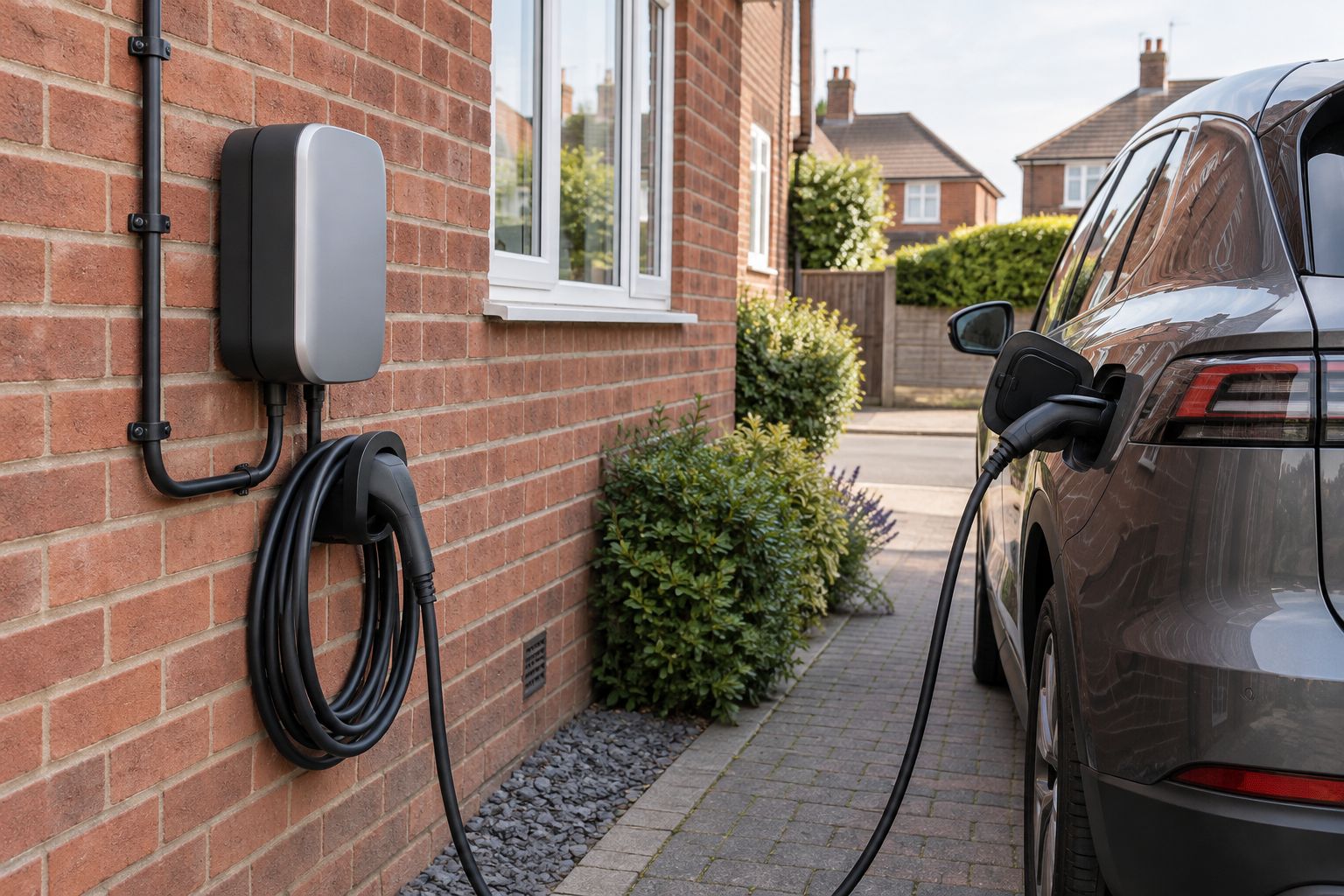
Wall-mounted home EV chargepoint beside a private driveway

Signs you need EV charger installation

  • You have off-street parking and want a dedicated home chargepoint
  • A new electric car or plug-in hybrid needs compatible charging equipment
  • You want scheduled charging or compatibility with solar generation
  • An existing chargepoint needs replacement or a revised installation layout

What the electrician may do

  • Survey the meter position, supply rating, consumer unit, earthing and other large loads
  • Agree a safe cable route and check parking permissions and ownership
  • Follow the distribution network operator’s connection process, obtaining approval before connection where required
  • Install a dedicated circuit, suitable protective devices and the specified chargepoint
  • Test, commission, set appropriate load limits and demonstrate the controls and charging lead
  • Provide the Electrical Installation Certificate and arrange applicable building-control records

Tethered units have an attached lead; socketed units use a separate one. Check the car’s AC charging limit, tariff compatibility and internet requirements before choosing. Earthing and open-PEN protection need a design suited to the supply; an earth rod is not automatically required for every installation. Never plan a charging cable across a public footway without the necessary permissions and an approved arrangement.

What to include when asking for a quote

Give the car model, parking position, likely cable distance and details of solar panels, battery storage, heat pumps or electric showers. Provide accessible exterior photographs without opening electrical covers or touching sealed equipment. Ask which charger and cable length are included, how connectivity is provided and who handles network permissions.

What does EV charger installation cost?

The indicative UK guide range is £800–£1,600. It is a budgeting allowance rather than a guaranteed quotation. Ask for the total payable, including VAT where applicable, and a clear list of exclusions.

The charger model, cable length, route, trenching and protective-device requirements affect cost. Load management may help limit demand, but the installer must assess whether supply work is needed. Network-operator upgrades, a new enclosure, groundworks and parking alterations can fall outside a standard package.

Checks, testing and documents

Ask who will inspect and test the work, which electrical certificate is included and who handles any building-control notification. Approved Document P for England explains England’s notification rules. Wales has its own Part P guidance; Scotland and Northern Ireland have different building standards arrangements. The job and its location determine the route, so agree it before work begins.

The Energy Networks Association connection guidance explains the installer’s network process. Agree who is responsible for the application or notification before work starts.

Companies joining the network are asked to provide relevant insurance details and references. Before booking, check current insurance, relevant experience and registration for the work yourself. Electrical Safety First’s electrician register can help you check a business’s listed scope. A listing or introduction does not replace agreeing a written specification with your chosen electrician.

Questions homeowners ask

How long does home EV charger installation take in the UK?

A straightforward installation often takes half a day to a day after the survey and required permissions are complete. Supply upgrades, difficult routes or network approval can extend the overall lead time.

Can every home have a 7kW charger?

No. The installer must check the supply, earthing, available capacity and parking arrangement. The car may also limit AC charging speed. Some homes need load management, a reduced charging setting or supply alterations.

Who contacts the electricity network operator?

Agree this with the installer. They should follow the distribution network operator’s connection process and obtain approval before connecting where required. The correct route depends on the equipment and supply assessment.

Is a new consumer unit always needed?

No. The existing arrangement may be suitable, or a separate enclosure or other changes may be needed. Ask for the assessment and any additional work to be explained before accepting the quotation.

Request quotations for EV charger installation

Trusted Electricians is a matching service for independent businesses. One free online enquiry can help you receive up to four quotations from local electricians, depending on coverage, the work requested and availability. Four quotations are not guaranteed, and there is no obligation to accept one.

Describe your project and include the details above so electricians can judge the scope before contacting you.

Find EV Charger Installation Specialists by County

Select your county to browse local EV charger installation contractors and request free quotes.

Aberdeen City
Scotland
5 towns covered
Aberdeenshire
Scotland
10 towns covered
Anglesey
Wales
7 towns covered
Angus
Scotland
6 towns covered
Argyll and Bute
Scotland
6 towns covered
Bedfordshire
East of England
15 towns covered
Berkshire
South East England
15 towns covered
Blaenau Gwent
Wales
6 towns covered
Bridgend
Wales
6 towns covered
Bristol
South West England
12 towns covered
Buckinghamshire
South East England
15 towns covered
Caerphilly
Wales
7 towns covered
Cambridgeshire
East of England
15 towns covered
Cardiff
Wales
7 towns covered
Carmarthenshire
Wales
7 towns covered
Ceredigion
Wales
6 towns covered
Cheshire
North West England
16 towns covered
City of Edinburgh
Scotland
6 towns covered
Clackmannanshire
Scotland
5 towns covered
Conwy
Wales
6 towns covered
Cornwall
South West England
20 towns covered
County Antrim
Northern Ireland
10 towns covered
County Armagh
Northern Ireland
7 towns covered
County Down
Northern Ireland
10 towns covered
County Durham
North East England
15 towns covered
County Fermanagh
Northern Ireland
5 towns covered
County Londonderry
Northern Ireland
7 towns covered
County Tyrone
Northern Ireland
7 towns covered
Cumbria
North West England
15 towns covered
Denbighshire
Wales
6 towns covered
Derbyshire
East Midlands
15 towns covered
Devon
South West England
20 towns covered
Dorset
South West England
15 towns covered
Dumfries and Galloway
Scotland
7 towns covered
Dundee City
Scotland
4 towns covered
East Ayrshire
Scotland
6 towns covered
East Dunbartonshire
Scotland
5 towns covered
East Lothian
Scotland
6 towns covered
East Renfrewshire
Scotland
5 towns covered
East Riding of Yorkshire
Yorkshire and the Humber
14 towns covered
East Sussex
South East England
15 towns covered
Essex
East of England
20 towns covered
Falkirk
Scotland
6 towns covered
Fife
Scotland
10 towns covered
Flintshire
Wales
6 towns covered
Glasgow City
Scotland
7 towns covered
Gloucestershire
South West England
15 towns covered
Greater London
London
30 towns covered
Greater Manchester
North West England
20 towns covered
Gwynedd
Wales
7 towns covered
Hampshire
South East England
20 towns covered
Herefordshire
West Midlands
10 towns covered
Hertfordshire
East of England
16 towns covered
Highland
Scotland
10 towns covered
Inverclyde
Scotland
5 towns covered
Isle of Wight
South East England
10 towns covered
Kent
South East England
20 towns covered
Lancashire
North West England
20 towns covered
Leicestershire
East Midlands
15 towns covered
Lincolnshire
East Midlands
18 towns covered
Merseyside
North West England
14 towns covered
Merthyr Tydfil
Wales
5 towns covered
Midlothian
Scotland
5 towns covered
Monmouthshire
Wales
6 towns covered
Moray
Scotland
6 towns covered
Na h-Eileanan Siar
Scotland
5 towns covered
Neath Port Talbot
Wales
6 towns covered
Newport
Wales
6 towns covered
Norfolk
East of England
16 towns covered
North Ayrshire
Scotland
6 towns covered
North Lanarkshire
Scotland
7 towns covered
North Yorkshire
Yorkshire and the Humber
18 towns covered
Northamptonshire
East Midlands
15 towns covered
Northumberland
North East England
15 towns covered
Nottinghamshire
East Midlands
15 towns covered
Orkney Islands
Scotland
4 towns covered
Oxfordshire
South East England
15 towns covered
Pembrokeshire
Wales
7 towns covered
Perth and Kinross
Scotland
7 towns covered
Powys
Wales
8 towns covered
Renfrewshire
Scotland
6 towns covered
Rhondda Cynon Taf
Wales
7 towns covered
Rutland
East Midlands
10 towns covered
Scottish Borders
Scotland
7 towns covered
Shetland Islands
Scotland
4 towns covered
Shropshire
West Midlands
15 towns covered
Somerset
South West England
18 towns covered
South Ayrshire
Scotland
5 towns covered
South Lanarkshire
Scotland
8 towns covered
South Yorkshire
Yorkshire and the Humber
14 towns covered
Staffordshire
West Midlands
15 towns covered
Stirling
Scotland
5 towns covered
Suffolk
East of England
15 towns covered
Surrey
South East England
20 towns covered
Swansea
Wales
6 towns covered
Torfaen
Wales
5 towns covered
Tyne and Wear
North East England
13 towns covered
Vale of Glamorgan
Wales
6 towns covered
Warwickshire
West Midlands
13 towns covered
West Dunbartonshire
Scotland
4 towns covered
West Lothian
Scotland
6 towns covered
West Midlands
West Midlands
18 towns covered
West Sussex
South East England
15 towns covered
West Yorkshire
Yorkshire and the Humber
18 towns covered
Wiltshire
South West England
15 towns covered
Worcestershire
West Midlands
13 towns covered
Wrexham
Wales
6 towns covered
Advertisement