
📋

EICR & Electrical Testing Specialists Across the UK

Electrical Installation Condition Reports for homeowners and landlords, periodic inspection and testing of every circuit, with C1, C2, C3 and FI codes explained.

💰 Typical cost: £120–£350⏱ Timeframe: 2–5 hours📋 Free surveys available
Job profileCost 1 of 5, Complexity 3 of 5, Duration 2 of 5, Dustiness 1 of 5, Disturbance 2 of 5Cost: 1 of 5Complexity: 3 of 5Duration: 2 of 5Dustiness: 1 of 5Disturbance: 2 of 5Cost1/5Complexity3/5Duration2/5Dustiness1/5Disturbance2/5
What the job involves, at a glance

What is an EICR?

An Electrical Installation Condition Report, or EICR, records the condition of existing fixed electrical wiring after inspection and testing. It covers the agreed installation, including circuits, protective devices, earthing and a suitable sample of accessories. It does not certify a new installation or automatically include repairs.
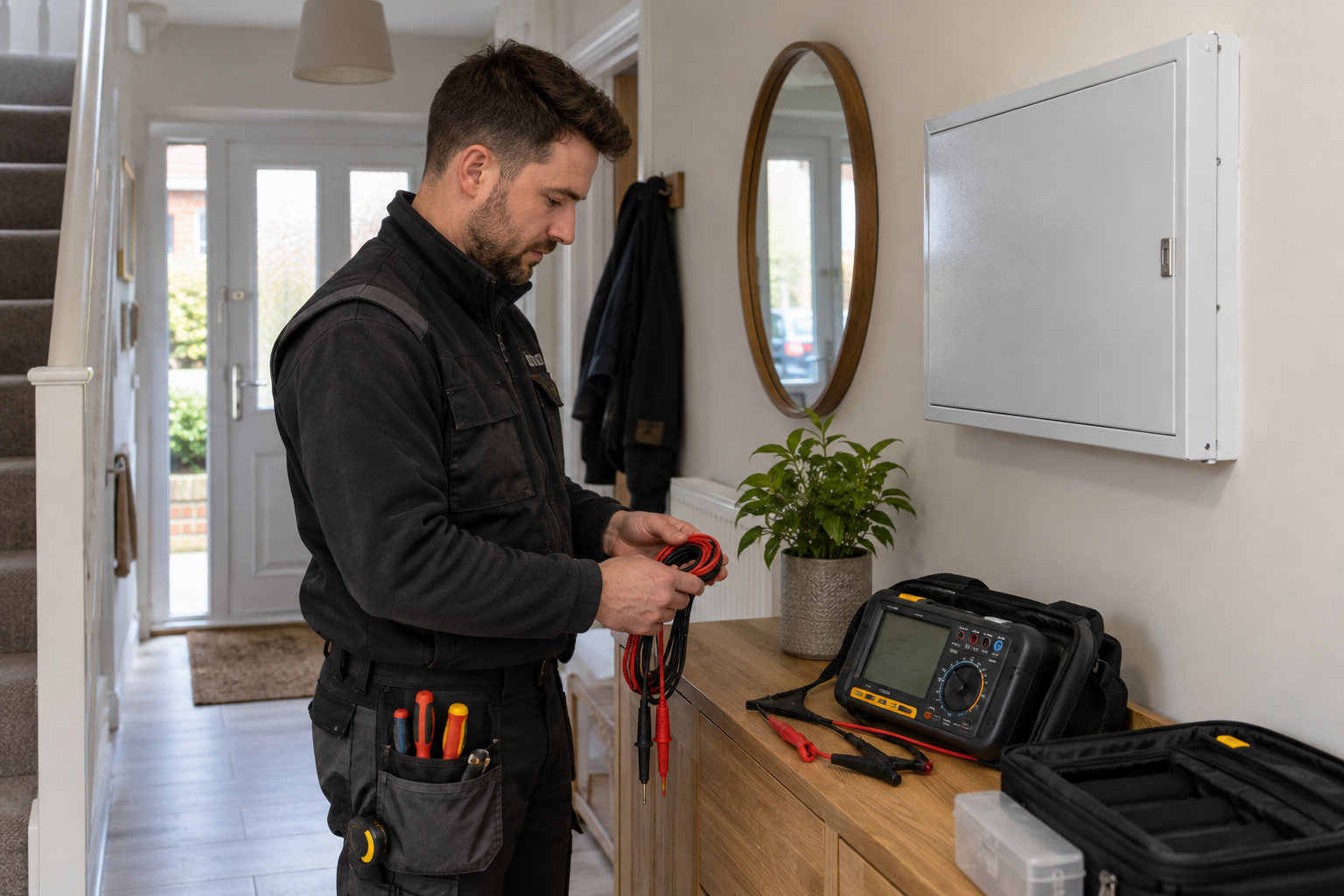
Electrician preparing inspection equipment beside a closed consumer unit

Signs you need EICR electrical testing

  • A letting property is due for its next electrical inspection
  • You are buying a home without a recent condition report
  • Previous alterations or recurring faults need a proper assessment
  • An insurer, agent or surveyor has requested a report on the fixed wiring

What the electrician may do

  • Agree the installation covered, circuit count, access and any unavoidable limitations
  • Inspect accessible wiring, consumer units, earthing, bonding and sampled accessories
  • Safely isolate for dead tests and undertake the necessary live tests using suitable equipment
  • Record results, observations and classification codes with a satisfactory or unsatisfactory outcome
  • Explain urgent action, further investigation and separately priced remedial work

C1 means danger present and requires immediate action; C2 means potentially dangerous; C3 means improvement recommended; FI means further investigation required without delay. C1, C2 or FI observations make a report unsatisfactory. A C3 alone does not. An older installation is assessed for safety, rather than failed simply because every detail differs from current practice.

What to include when asking for a quote

Provide the number of bedrooms, any previous report and a photograph of the consumer unit’s exterior or normal user-accessible labels. Do not remove its cover. Arrange access to rooms and accessories, and warn the inspector about medical equipment, alarms, home-working and anything affected by a power interruption.

What does EICR electrical testing cost?

The indicative UK guide range is £120–£350. It is a budgeting allowance rather than a guaranteed quotation. Ask for the total payable, including VAT where applicable, and a clear list of exclusions.

Circuit count, extra consumer units, installation complexity and access affect the inspection fee. A large house with outbuildings takes longer than a small flat. The guide price covers inspection and the report; repairs, further investigation and a return visit should be identified separately.

Checks, testing and documents

An inspection does not itself install new circuits. Repairs or subsequent alterations may need their own testing, certification and notification arrangements, depending on the work and location.

Rental rules differ across the UK and can require shorter intervals where a report specifies them. Check the current government guidance for rental property in England and the equivalent guidance for the property’s nation and tenancy.

Electrical Safety First’s best practice guides explain condition reporting and classification codes.

Companies joining the network are asked to provide relevant insurance details and references. Before booking, check current insurance, relevant experience and registration for the work yourself. Electrical Safety First’s electrician register can help you check a business’s listed scope. A listing or introduction does not replace agreeing a written specification with your chosen electrician.

Questions homeowners ask

How long does an EICR take in the UK?

The site’s guide is two to five hours, depending on circuit count, access and complexity. Confirm the agreed scope and allow for power interruptions. Larger installations or faults requiring investigation can take longer.

Does an unsatisfactory EICR always mean a rewire?

No. The observations may call for a targeted repair, protective-device changes or further investigation. Ask the inspector to explain each code and the evidence before agreeing to a separate remedial quotation.

Is an EICR the same as appliance testing?

No. An EICR assesses the fixed installation within its agreed scope. In-service inspection and testing of appliances is a separate service, so tell the contractor if you also need that work.

When should my next electrical inspection be arranged?

Follow the report’s recommended interval and any shorter period required by the condition of the installation. Landlords must also follow the rules for their UK nation and tenancy; do not assume one timetable covers every property.

Request quotations for EICR electrical testing

Trusted Electricians is a matching service for independent businesses. One free online enquiry can help you receive up to four quotations from local electricians, depending on coverage, the work requested and availability. Four quotations are not guaranteed, and there is no obligation to accept one.

Describe your project and include the details above so electricians can judge the scope before contacting you.

Find EICR & Electrical Testing Specialists by County

Select your county to browse local EICR electrical testing contractors and request free quotes.

Aberdeen City
Scotland
5 towns covered
Aberdeenshire
Scotland
10 towns covered
Anglesey
Wales
7 towns covered
Angus
Scotland
6 towns covered
Argyll and Bute
Scotland
6 towns covered
Bedfordshire
East of England
15 towns covered
Berkshire
South East England
15 towns covered
Blaenau Gwent
Wales
6 towns covered
Bridgend
Wales
6 towns covered
Bristol
South West England
12 towns covered
Buckinghamshire
South East England
15 towns covered
Caerphilly
Wales
7 towns covered
Cambridgeshire
East of England
15 towns covered
Cardiff
Wales
7 towns covered
Carmarthenshire
Wales
7 towns covered
Ceredigion
Wales
6 towns covered
Cheshire
North West England
16 towns covered
City of Edinburgh
Scotland
6 towns covered
Clackmannanshire
Scotland
5 towns covered
Conwy
Wales
6 towns covered
Cornwall
South West England
20 towns covered
County Antrim
Northern Ireland
10 towns covered
County Armagh
Northern Ireland
7 towns covered
County Down
Northern Ireland
10 towns covered
County Durham
North East England
15 towns covered
County Fermanagh
Northern Ireland
5 towns covered
County Londonderry
Northern Ireland
7 towns covered
County Tyrone
Northern Ireland
7 towns covered
Cumbria
North West England
15 towns covered
Denbighshire
Wales
6 towns covered
Derbyshire
East Midlands
15 towns covered
Devon
South West England
20 towns covered
Dorset
South West England
15 towns covered
Dumfries and Galloway
Scotland
7 towns covered
Dundee City
Scotland
4 towns covered
East Ayrshire
Scotland
6 towns covered
East Dunbartonshire
Scotland
5 towns covered
East Lothian
Scotland
6 towns covered
East Renfrewshire
Scotland
5 towns covered
East Riding of Yorkshire
Yorkshire and the Humber
14 towns covered
East Sussex
South East England
15 towns covered
Essex
East of England
20 towns covered
Falkirk
Scotland
6 towns covered
Fife
Scotland
10 towns covered
Flintshire
Wales
6 towns covered
Glasgow City
Scotland
7 towns covered
Gloucestershire
South West England
15 towns covered
Greater London
London
30 towns covered
Greater Manchester
North West England
20 towns covered
Gwynedd
Wales
7 towns covered
Hampshire
South East England
20 towns covered
Herefordshire
West Midlands
10 towns covered
Hertfordshire
East of England
16 towns covered
Highland
Scotland
10 towns covered
Inverclyde
Scotland
5 towns covered
Isle of Wight
South East England
10 towns covered
Kent
South East England
20 towns covered
Lancashire
North West England
20 towns covered
Leicestershire
East Midlands
15 towns covered
Lincolnshire
East Midlands
18 towns covered
Merseyside
North West England
14 towns covered
Merthyr Tydfil
Wales
5 towns covered
Midlothian
Scotland
5 towns covered
Monmouthshire
Wales
6 towns covered
Moray
Scotland
6 towns covered
Na h-Eileanan Siar
Scotland
5 towns covered
Neath Port Talbot
Wales
6 towns covered
Newport
Wales
6 towns covered
Norfolk
East of England
16 towns covered
North Ayrshire
Scotland
6 towns covered
North Lanarkshire
Scotland
7 towns covered
North Yorkshire
Yorkshire and the Humber
18 towns covered
Northamptonshire
East Midlands
15 towns covered
Northumberland
North East England
15 towns covered
Nottinghamshire
East Midlands
15 towns covered
Orkney Islands
Scotland
4 towns covered
Oxfordshire
South East England
15 towns covered
Pembrokeshire
Wales
7 towns covered
Perth and Kinross
Scotland
7 towns covered
Powys
Wales
8 towns covered
Renfrewshire
Scotland
6 towns covered
Rhondda Cynon Taf
Wales
7 towns covered
Rutland
East Midlands
10 towns covered
Scottish Borders
Scotland
7 towns covered
Shetland Islands
Scotland
4 towns covered
Shropshire
West Midlands
15 towns covered
Somerset
South West England
18 towns covered
South Ayrshire
Scotland
5 towns covered
South Lanarkshire
Scotland
8 towns covered
South Yorkshire
Yorkshire and the Humber
14 towns covered
Staffordshire
West Midlands
15 towns covered
Stirling
Scotland
5 towns covered
Suffolk
East of England
15 towns covered
Surrey
South East England
20 towns covered
Swansea
Wales
6 towns covered
Torfaen
Wales
5 towns covered
Tyne and Wear
North East England
13 towns covered
Vale of Glamorgan
Wales
6 towns covered
Warwickshire
West Midlands
13 towns covered
West Dunbartonshire
Scotland
4 towns covered
West Lothian
Scotland
6 towns covered
West Midlands
West Midlands
18 towns covered
West Sussex
South East England
15 towns covered
West Yorkshire
Yorkshire and the Humber
18 towns covered
Wiltshire
South West England
15 towns covered
Worcestershire
West Midlands
13 towns covered
Wrexham
Wales
6 towns covered
Advertisement